5 Padrões Setoriais de Inovação
5.1 Pavitt (1984)
explain sectoral patterns of technical change as revealed by data on about 2000 significant innovations in Britain since 1945 until 1979.
Most technological knowledge turns out not to be “information” that is generally applicable and easily reproducible. but specific to firms and applications, cumulative in development and varied amongst sectors in source and direction.
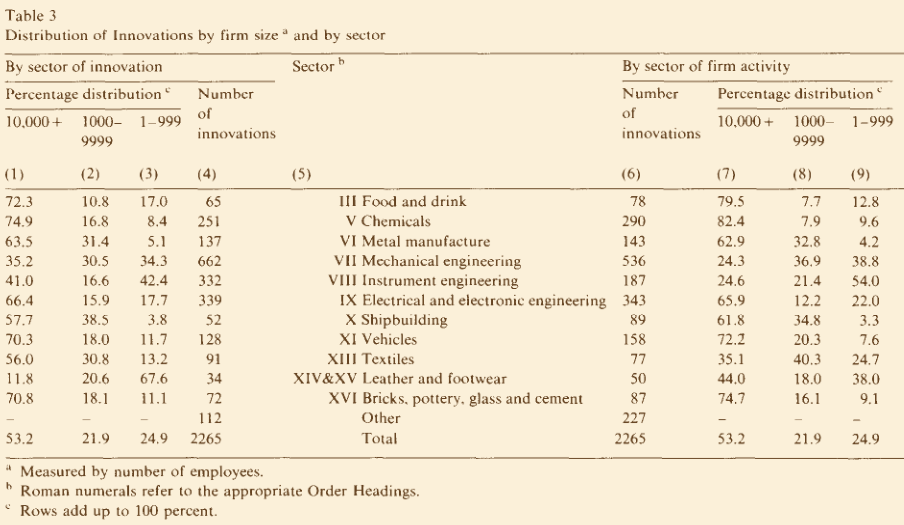
Innovating firms principally in electronics and chemicals. are relatively big. and they develop mnovations over a wide range of specific product groups within their principal sector, but relatively few outside.
Firms principally in mechanical and instrument engineering are relatively small and specialised. and they exist in symbiosis with large firms, in scale intensive sectors like metal manufacture and vehicles, who make a significant contribution to their own process technology.
In textile firms, on the other hand, most process innovations come from suppliers.
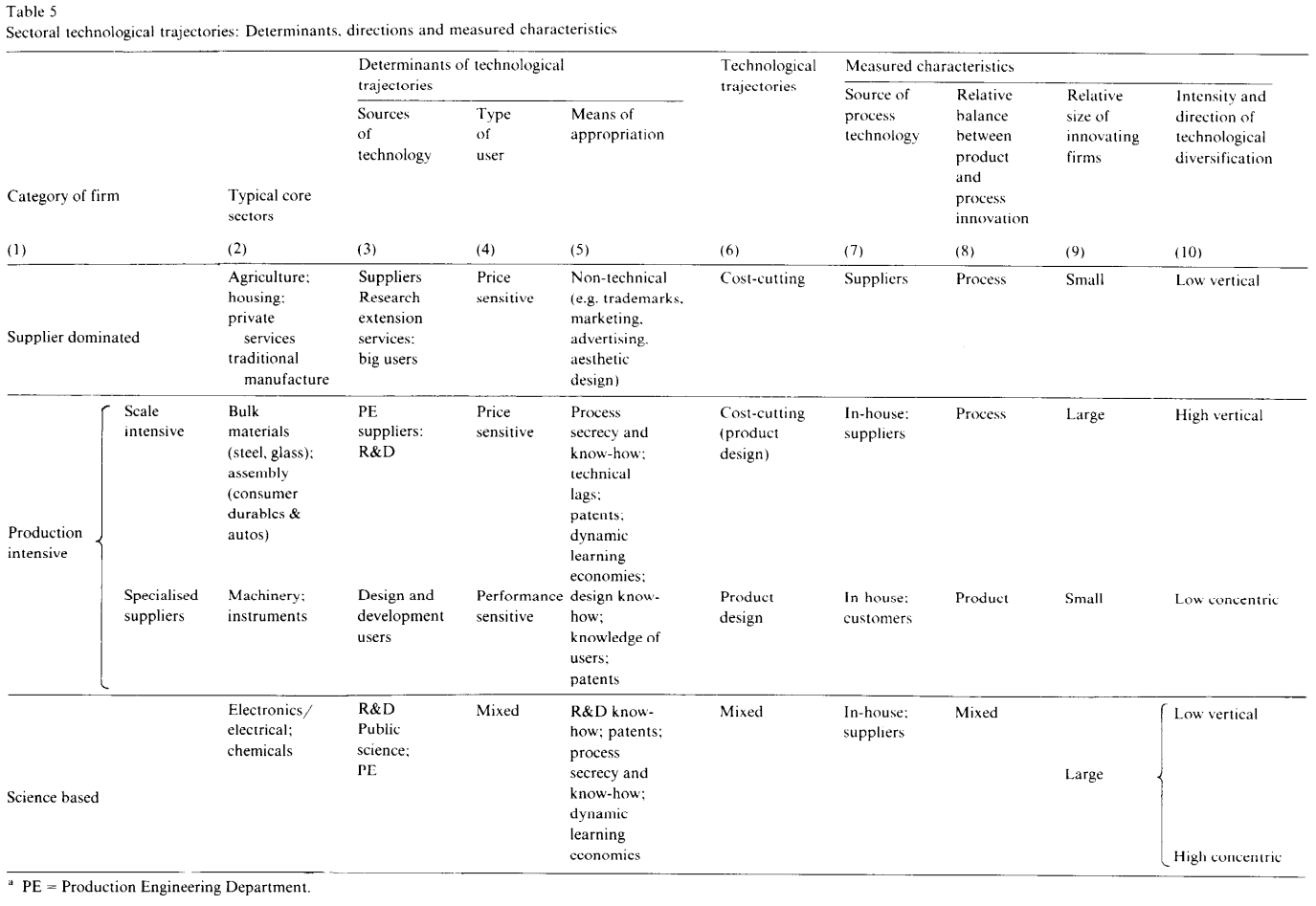
These characteristics and variations can be classified in a three part taxonomy based on firms: (1) supplier dominated; (2) production intensive; (3) science based.
Table 1
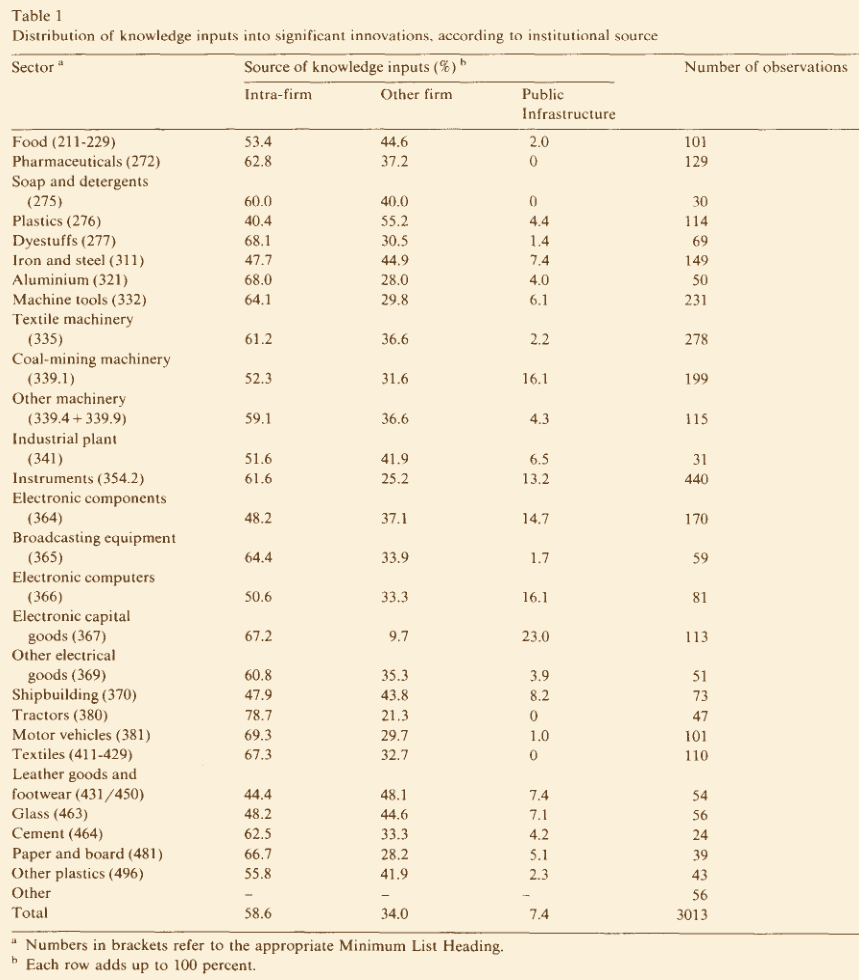
- Sources of the main knowledge inputs into the innovations were identified by asking the sectoral experts and the innovating firms to identify the type of institution that provided up to the three most important knowledge inputs into each innovation.
Table 2 porcentagem de todas as inovações que são produzidas em cada setor,
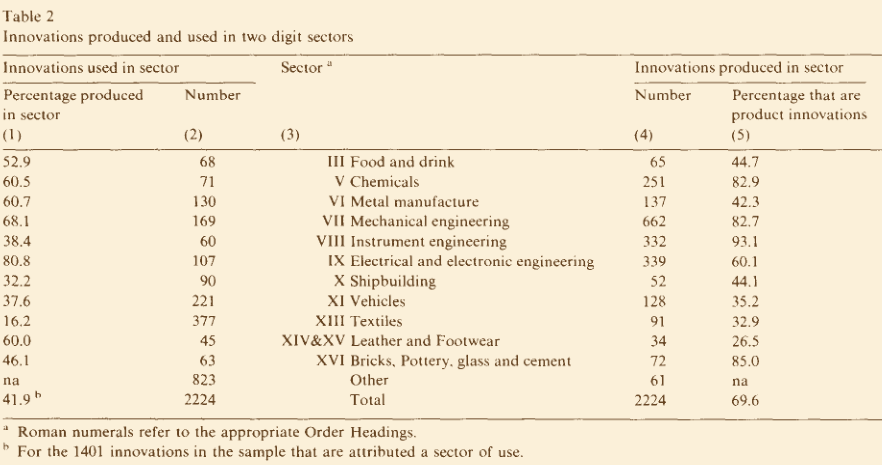
Table 3 Firm size by sector
5.1.1 Taxonomy
Table 5
5.3 De Negri e Squeff (2016)
Contém capítulos específicos sobre sistema setorial de inovação, no Brasil, para os seguintes setores: defesa, saúde, energias renováveis, TICs, petróleo e gás natural, construção civil e ciências agrárias.